How long is too long?

Kodakai

New member
I recently started another mini to break up my work flow and something occurred to me while applying the 10th layer of basecoat. How long is should i spend building up a layer?

I've undercoated the model in black so this obviously makes the basecoat require more work. Thing is i'm starting to think i've thinned my paint too much. I'm applying layer after layer, and around 10 layers in it's starting to come together. Things is this has taken most of the night, about 4 hours.

Is this wise? I don't mind spending the time if it gets better results but am i unnecessarily taking too long?

I've thinned my paint to the consistency of milk, but i don't get great coverage with each passing layer. This would obviously be good when applying highlights but perhaps a bit too much here? As i said before, if this is the best way to get good results then so be it, but if i'm just wasting time, well it's probably best to know.
 

TAB Studio

New member
What paint are you using please?
I hear the milk thing a lot here but for base coat I do more like a light cream I do prime white and know that black is much harder to cover 10 coats is quite a bit for a base...now if your doing skin no I have a would do ten layers at times but for the shades and highlights not the base color...three for base is about par if it is a smooth mini.
I feel sure everyone has there own method though, maybe someone has a better one?
 

Tagamoga

New member
milk or a little bit thinner is good for blendings... in my opinion... but for base coat I need maximum 3-4 layers to cover black primer with pure white 100% covering the black. And echoing TabStudio my colour for base coat has a cream consistance too.

Greetings, Taggi
 

funnymouth

Active member
if most people on this site had their way you'd be applying a single grain of pigment at a time, suspended in liters of water. rubbish. i add only a small amount of water for most applications - just enough for the paint to run off the brush easily. sometimes more, sometimes less. when i basecoat its straight out of the pot with a drop of water on the brush. im not the best painter, but im not the worst either, and for the basecoat, frankly i dont think it matters as long as you are not obscuring detail.
 

Chrome

New member
if most people on this site had their way you'd be applying a single grain of pigment at a time, suspended in liters of water. rubbish. i add only a small amount of water for most applications - just enough for the paint to run off the brush easily. sometimes more, sometimes less. when i basecoat its straight out of the pot with a drop of water on the brush. im not the best painter, but im not the worst either, and for the basecoat, frankly i dont think it matters as long as you are not obscuring detail.

IMHO that's the best way to go, at least until you have experimented enough to find what suits you and the current model.
Personally I love the effect of not getting any obvious results for ten or so layers just for it to pop into your face when you add that last bit that seemingly altered the whole paintjob. But that's only on very special models, I'm far, far from the most patient painter around so I usually want the whole model to be done and done in five or so layers but I just can't argue with the difference in my own results switching between the two.
 

Kodakai

New member
TAB - I'm using Citadel paints.

I think i must be over watering then. I have noticed the surface of the mini has a number of imperfections which start to show more as the layers build up. Small pits in the surface tend to make the paint pool. I've been trying to smooth this out as best i can and i'm certain it'll become less obvious as the paint builds.

I can foresee a problem when i come to highlighting though as i won't be building the layers as much and those pits may become more obvious.
 

Einion

New member
For undercoats I also often thin to around the consistency of cream. Something that's been mentioned a few times is that, depending on the paint you're starting with, it might already be about the consistency of cream. Regardless of whether you need to dilute though, what you're aiming for is paint that's thin enough to go down without leaving brushmarks and not obscure fine detail.

Whatever colour you're using is probably not that opaque though from the sounds of it. So something else worth trying when working over black is to undercoat in a similar colour that you know covers better. So say you're eventually wanting red, undercoat in a red earth colour and then layering your actual red on top of this will go a lot easier. Similar deal for yellows: mix up a light blend of white and an ochre colour if you have one and undercoat with that; it's very likely to be much more opaque than any of your yellows.

funnymouth said:
if most people on this site had their way you'd be applying a single grain of pigment at a time, suspended in liters of water. rubbish.
That's not at all exaggerated, no siree bob! Joking aside, there are plenty of references in past threads to undercoating with paint around the consistency of cream, as well as modest dilution levels (1:1, 1:2) for undercoats and basic painting.

Einion
 

freakinacage

Well-known member
when you say cream, do you mean single whipping or double? CLOTTED?!!! evenm if it was the thinnest single cream, i would have to actually dry my paint out to get that thick...

anyways for base coats, usually about 1:1 for me. depends on the paints. as mentioned, as long as it doesn't obscure the detail, it doesn't matter
 

Chrome

New member
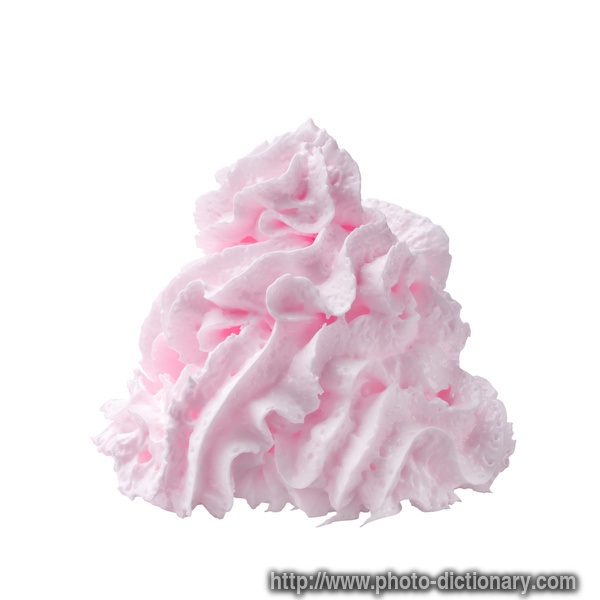
Of course this is the creamy consistency everyone is after!
2732whipped_cream.jpg

/Sarcasm. :D
 
Last edited:

Einion

New member
freakinacage said:
when you say cream, do you mean single whipping or double? CLOTTED?!!! evenm if it was the thinnest single cream, i would have to actually dry my paint out to get that thick...
Speaking for myself, I'm using tube paints so the thinnest of them is thicker than double cream.

Single cream isn't really that thick (it does vary of course) but IME it's often roughly the same consistency as VMC straight from the bottle (which also varies!) and obviously if the paint in a jar or bottle dries out a bit over time it can easy become thicker than that.

Einion
 

Kodakai

New member
I'll try some thicker washes tonight, and then water it down more when i get to final highlights. I would imagine this is where it counts most.

So something else worth trying when working over black is to undercoat in a similar colour that you know covers better. So say you're eventually wanting red, undercoat in a red earth colour and then layering your actual red on top of this will go a lot easier. Similar deal for yellows: mix up a light blend of white and an ochre colour if you have one and undercoat with that; it's very likely to be much more opaque than any of your yellows.

I like this idea Einion, i'll give that a shot on my next model. Hopefully i can speed the process up a bit. At the rate i'm going now i'll do one model a week! Way too slow.
 

CreganTur

Member
My rule of thumb is the good old milk consistency. A basecoat for me should take no more than 3 coats, and the 3rd coat should only be for covering stubborn streaks or weak spots in the paint. If I have to do more than that, then I know my paints are far too dilute.
 

TAB Studio

New member
I drink fat free milk so milk consistency to me is water...and I think I mentioned light cream (half and half) so the whip sh*t would not work ...though it would be much more fun:tongue:

Why not just prime white...(runs for cover)
but really that is and easier start for most projects and avoids the cover-up issues you have now.

I use magic wash for everything ,even the brush wash up so I feel I have less pooling I was taught that way, and because I handle the minis a bit to stabilize them it helps so the paint does not rub off.

I as well use the dry brush after the wet layer applications sometimes not often yet when the layer area is a small one like a cheek blush or something.

I have started to also use tube paints like Einion and with those I use retarder along side the floor wax mix.

Your Cidadel are (least mine are) thicker and harder to mix than the Vallejo or Privateer so you really do need to thin a bit even on a base coat in my thoughts but apply enough base to smooth out those pits for sure or they will haunt you all the way through.

Just have fun and experiment something for me always screws up so I stopped taking it so seriously and found many of my screw ups were strokes of genius...pun intended
 

Lettuce

New member
I choose the primer depending on the final outcome I want. If its a fairly bright outcome, lots of colour then I generally choose white. If I want gritty and earthy I choose black.

lacks also good if your want speed as it can hide a multitude of sins and you can use it to help blackline your mini.

But the same outcome can be achieved with either.
 

Tagamoga

New member
Primig to me is AWAYS with both colors. First black, then I add with a could of mist of white for non zenital light. So I always know exactly whre shadows are, where light gradients are, and where the final highlight have to be.
 

Lettuce

New member
Chris Blair has been quoted as that you can never water down your paints enough. So even if it takes 30 layers to build up a basecoat It should be fine.

its the pigment of the paint thats important not really how thin it is surely?
 

devoncodain

New member
Primig to me is AWAYS with both colors. First black, then I add with a could of mist of white for non zenital light. So I always know exactly whre shadows are, where light gradients are, and where the final highlight have to be.

Taggi that is a great Idea I have never thought of that.
Taggi, der eine große Idee ist, die ich nie davon gedacht habe.
 
Back To Top
Top