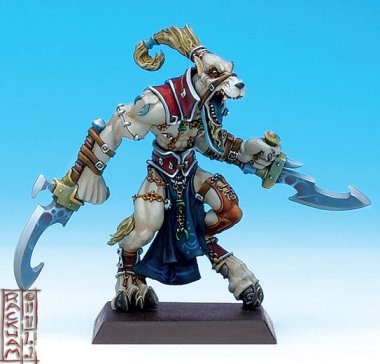
Sorry for the delay in response,a lot to do
Well a video might help you indeed - the first DVD of the Miniature Mentor Line is pretty amazing in terms of quality but exhausting ( ~ 4 hours... ), plus the price.
Anyway watching a miniature being painted from the very beginning is always helpfull.
Alternatevly, try to find someone who is a more advanced painter in your area and ask him about paintingsessions - even better than a video.
your problem with the NMM is probably a blending issue - unfortunately i´m not good with NMM ( i prefer real metallics), but asking some of the painter here at CMON per PM might ge you further - or just check the article section. Right Now theBack of the Instrument of your Mid Nor looks like you tried painting hot metal - it doenst look like gold, more like metal cooling down after being red-hot.
With you question about Primer and how to proceed - that ´s really a matter of personal taste. ( or should i say believe ?) Some people get really amazing results by using black primer other swear on their grandparents live it has to be white primer lol. basically there are two ways
1.) black primer: prime the mini and apply the diluted base colours you chose. The black primer will darken the colors (Attention: acrylic color ALWAYS darkens when drying , because the acrylic medium has a slightly milky color , making the color appear lighter when wet). then aply more thinned down layers of your base colors, then your highlights, working your way from the shadows to the lightest pparts of your mini.
painting this way makes the blach primer work for you and you don´t have to care for shading . Also in my opinion, black primer is a good beginner´s choice when dealing with real metal, since one can appply the metals like the other colors from dark to lightest shade instead of \"working your way backwards \" like you would have to do on a white basecoat where you would start with the lighteat shade and then use thinned glazes to shade the color.
you can see this technique
HERE
2. White primer: White primer makes it harder to achieve a uniform coat of color since your primer is lighter then your basecoat and will bepartly visible through your basecoat (logical, eh ?

) but makes highlighting and shading easy when working with diluted colour - which is also important for blending. just apply several thinned coats of your basecolor - it will flow into the recesses where you should get a uniform color while the elevated parts stand out thanks to the white coat shinning trough the translucent layer - now you just have to make these parts pop out by brushing on your highlights one aftger another. Alo white undercoats lets you paint colored shadows. You can see this technique
HERE