

Shawn R. L.
New member
40 years, hard to believe.
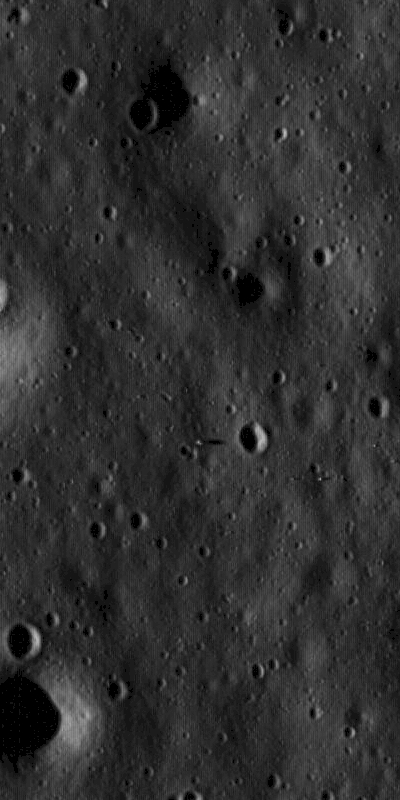


Just how difficult was it to fly this aircraft? In essence, Armstrong needed to fly a craft that was different from anything ever built, using controls devised from scratch, in one-sixth gravity, with no atmosphere, on a landscape whose features weren\'t truly known, and carrying enough fuel for only one attempt to land.
The first sign of trouble appeared when Houston\'s Mission Control lost radio contact with Eagle. The engineers jury-rigged a solution by patching communications from Eagle to Columbia (orbiting with Collins at the controls) and then to Houston. This added new pressure; in an emergency, there would be additional delays in communications.
While Armstrong looked out the window, Aldrin, monitoring displays and gauges on the dashboard, called out the data readings. Aldrin was so busy working, he never once looked out the window to watch the landing.
Although plummeting at 7,614 feet per second, neither man felt a sensation of descent. As Armstrong searched for the right place, it became clear that they were going to overshoot the target by almost four miles. At Mission Control, readouts showed that the astronauts were flying 20 feet per second faster than planned. (If the number reached 40, flight rules called for an abort.)
Armstrong now took control of the module. Said Aldrin later, \"He slowed our descent [until], at 300 feet, we were descending at only three and a half feet per second. As Eagle dropped, we continued skimming forward. Neil still wasn\'t satisfied with the terrain. He stroked the hand controller and descent-rate switch like a motorist fine-tuning his cruise control [as] we scooted across boulders.\"
Said Armstrong, \"I was surprised by the size of these boulders. Some were as big as motorcars.\"
Mission Control could not understand why Armstrong was taking so long. Said Floyd Bennett, planning chief, \"I said, \'What is he doing?\' We didn\'t know. He didn\'t have time to tell us that it was a rock field out there.\"
As fuel gauges dwindled, nerves began tightening further. Houston finally warned them that Armstrong had only 60 seconds of landing fuel remaining. Said Aldrin, \"When the [low fuel] light came on, and we were still not close to the ground, I was concerned. But what could I do? Say, \'Neil, hurry up\'? That would just excite him.\"
Armstrong said, \"Finally, we found an area ringed on one side by fairly good-sized craters and on the other by a boulder field; it was about the size of a big house lot.\"
Aldrin called out, \"Forty feet … Picking up dust … Thirty feet.\"
His nose and throat dry and cold from the tanked air, Armstrong finally saw a clear spot and put the ship into vertical landing position. The descent to the moon kicked up so much dust that at 30 feet, the ground below became a roiling cloud.
Neither man could feel it happen, but then, with about 17 seconds of fuel remaining, the dashboard\'s blue light ignited. A foot sensor had made contact.
At 3:17 p.m., Central Standard Time, on July 20, 1969, Neil Armstrong announced to the world, \"Houston, Tranquility Base here. The Eagle has landed.\"
Just how difficult was it to fly this aircraft? In essence, Armstrong needed to fly a craft that was different from anything ever built, using controls devised from scratch, in one-sixth gravity, with no atmosphere, on a landscape whose features weren\'t truly known, and carrying enough fuel for only one attempt to land.
The first sign of trouble appeared when Houston\'s Mission Control lost radio contact with Eagle. The engineers jury-rigged a solution by patching communications from Eagle to Columbia (orbiting with Collins at the controls) and then to Houston. This added new pressure; in an emergency, there would be additional delays in communications.
While Armstrong looked out the window, Aldrin, monitoring displays and gauges on the dashboard, called out the data readings. Aldrin was so busy working, he never once looked out the window to watch the landing.
Although plummeting at 7,614 feet per second, neither man felt a sensation of descent. As Armstrong searched for the right place, it became clear that they were going to overshoot the target by almost four miles. At Mission Control, readouts showed that the astronauts were flying 20 feet per second faster than planned. (If the number reached 40, flight rules called for an abort.)
Armstrong now took control of the module. Said Aldrin later, \"He slowed our descent [until], at 300 feet, we were descending at only three and a half feet per second. As Eagle dropped, we continued skimming forward. Neil still wasn\'t satisfied with the terrain. He stroked the hand controller and descent-rate switch like a motorist fine-tuning his cruise control [as] we scooted across boulders.\"
Said Armstrong, \"I was surprised by the size of these boulders. Some were as big as motorcars.\"
Mission Control could not understand why Armstrong was taking so long. Said Floyd Bennett, planning chief, \"I said, \'What is he doing?\' We didn\'t know. He didn\'t have time to tell us that it was a rock field out there.\"
As fuel gauges dwindled, nerves began tightening further. Houston finally warned them that Armstrong had only 60 seconds of landing fuel remaining. Said Aldrin, \"When the [low fuel] light came on, and we were still not close to the ground, I was concerned. But what could I do? Say, \'Neil, hurry up\'? That would just excite him.\"
Armstrong said, \"Finally, we found an area ringed on one side by fairly good-sized craters and on the other by a boulder field; it was about the size of a big house lot.\"
Aldrin called out, \"Forty feet … Picking up dust … Thirty feet.\"
His nose and throat dry and cold from the tanked air, Armstrong finally saw a clear spot and put the ship into vertical landing position. The descent to the moon kicked up so much dust that at 30 feet, the ground below became a roiling cloud.
Neither man could feel it happen, but then, with about 17 seconds of fuel remaining, the dashboard\'s blue light ignited. A foot sensor had made contact.
At 3:17 p.m., Central Standard Time, on July 20, 1969, Neil Armstrong announced to the world, \"Houston, Tranquility Base here. The Eagle has landed.\"


 think I’ll wait for the Carnival Cruise package


